
Self-learning raw material optimization from melting to casting
- Reduce production cost by 5 to 50 €/t*
- Maximize productivity and energy efficiency
- Determine real scrap quality and improve melt quality
- Reduce operator workload and simplify decision-making
* depending on alloying content and production route
system highlights

Self-learning scrap chemistry and metallic yield
Real scrap chemistry and metallic yield are continuously derived from actual production data. Instead of relying on static master data, the system uses a self-learning raw material model that improves the predictability of melt chemistry with every heat, reducing out-of-specification risk and the need for conservative safety buffers.

Combined scrap, DRI/HBI, alloying and energy optimization
Scrap, DRI/HBI, alloy additions and energy consumption are optimized in one integrated approach. By considering actual metallurgical performance, balancing chemical and electrical energy consumption, and downstream process impact, it identifies the most cost-effective and technically robust raw material strategy across the full production route.

Heat-by-heat or campaign optimization
The system supports both heat-by-heat optimization and campaign-level planning across multiple heats. This enables the strategic allocation of scarce raw materials, improves inventory management, and ensures that limited scrap grades or alloy carriers are used where they create the highest overall value.

Executable results for real plant operations
Optimization results are translated into directly executable charging decisions for real plant operations. Technological restrictions, material availabilities, bucket layering rules and other practical shop floor constraints are already embedded in the optimization logic, enabling fully autonomous operation and reducing manual effort in day-to-day decision-making.
use cases
- SELF-LEARNING SCRAP QUALITY
- ACCURATE MELT QUALITY PREDICTION
- CHARGE AND ALLOYING COST OPTIMIZATION
- ENERGY OPTIMIZATION
- DRI/HBI OPTIMIZATION
- CAMPAIGN OPTIMIZATION
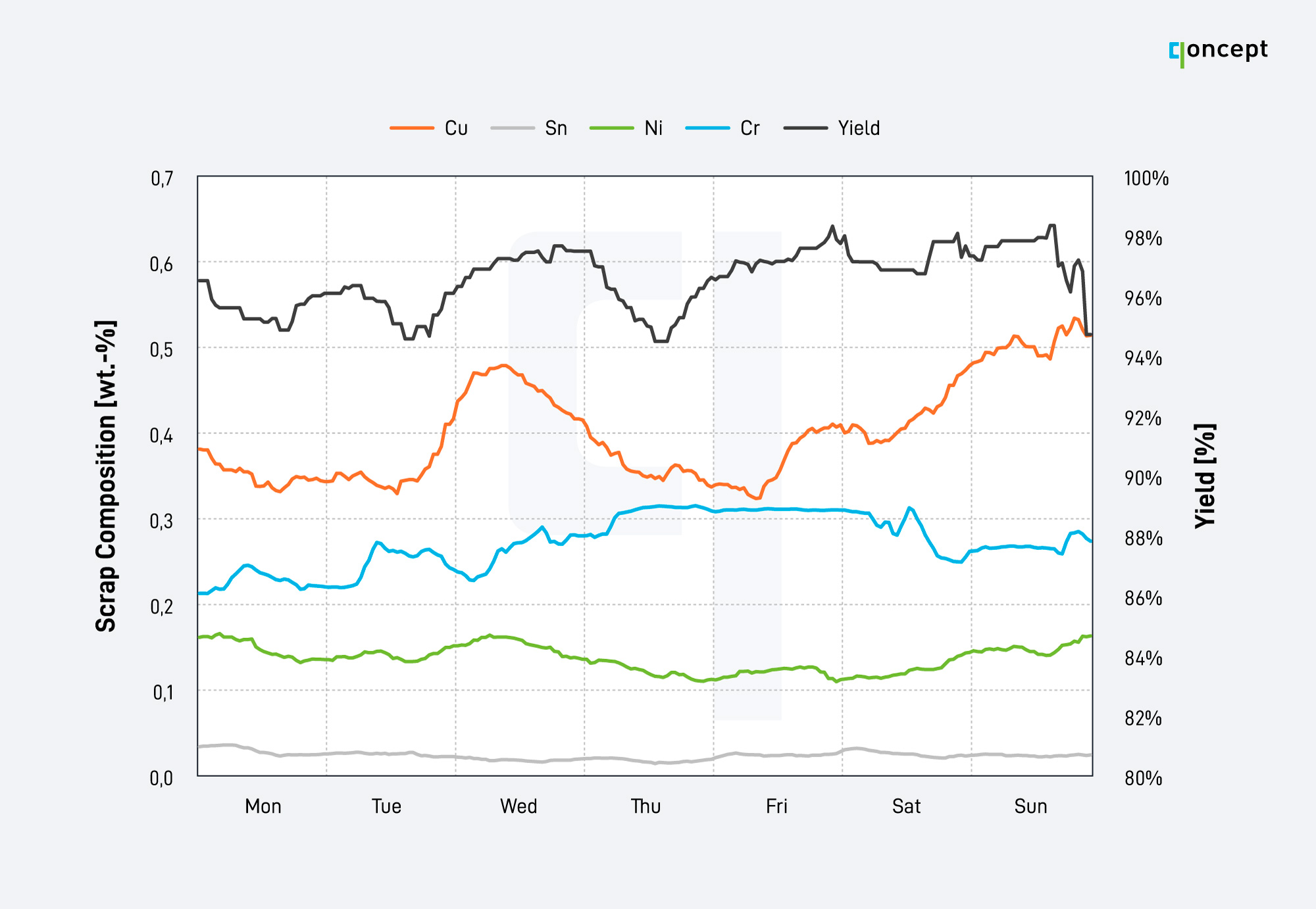
Self-learning scrap composition and metallic yield
In a project for a European rebar steel producer, qontrol MAPS was implemented to address significant variations in the chemical composition of incoming scrap. Because static scrap master data could not reliably reflect these fluctuations, the producer previously had to use substantial safety margins in charge planning. This increased the use of higher-quality and more expensive raw materials, resulting in unnecessarily high production costs.
The self-learning material characterization model of qontrol MAPS automatically determines the real-time quality of each raw material instead of relying on static, user-defined master data for chemical composition and metallic yield. The system combines advanced hybrid machine-learning algorithms with metallurgical models and uses production data that are routinely available in the melt shop as feedback signal. No additional sensors or physical equipment are required.
The following quality parameters can be determined for each material:
- Real-time chemical composition [wt.-%]
- Real-time metallic yield [%]
By capturing how scrap quality changes over time, qontrol MAPS provides a significantly more reliable basis to react on scrap-quality variations.
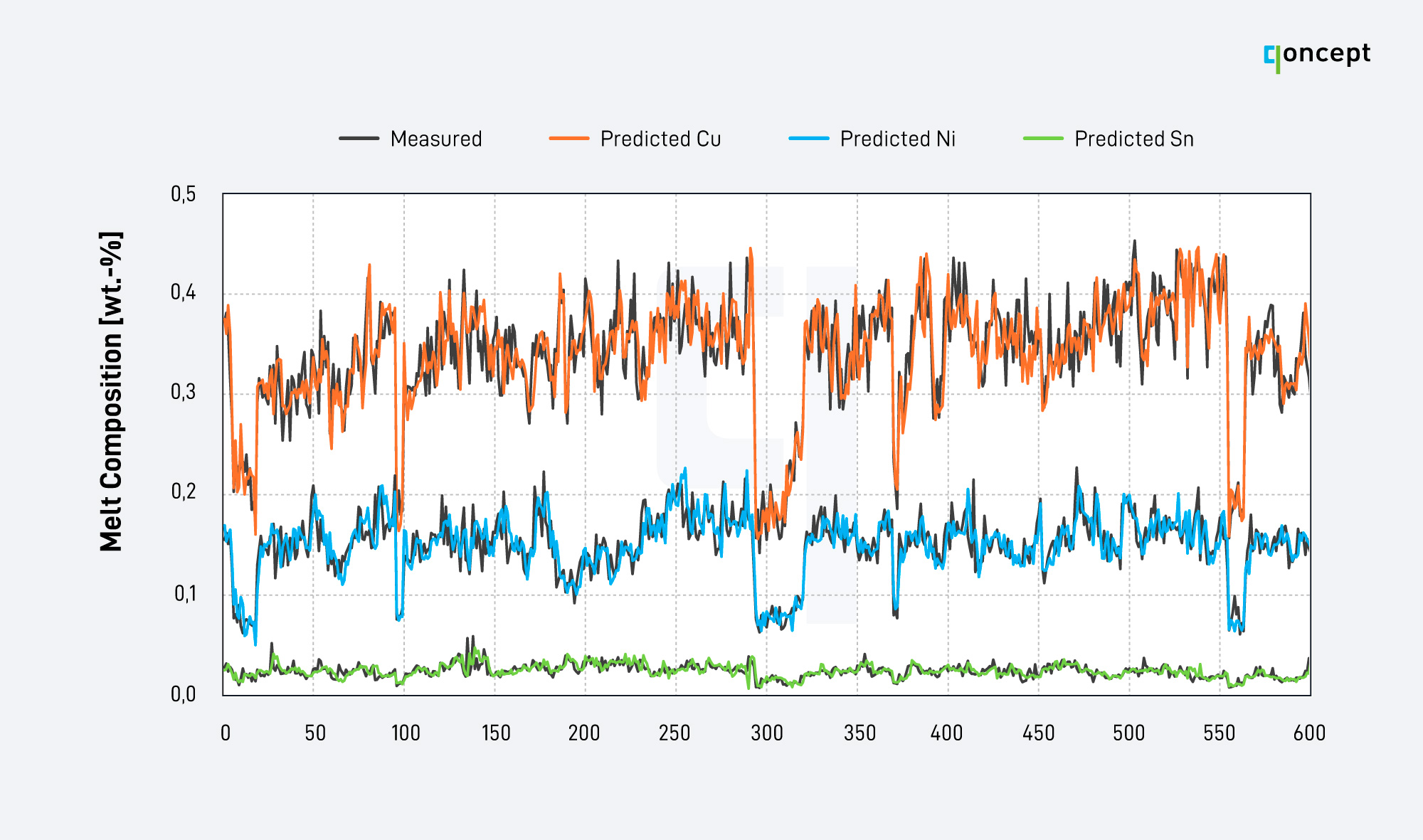
Accurate prediction of melt composition using self-learned scrap composition
In a second project phase with the same customer, qontrol MAPS used continuously updated material data from its self-learning material characterization model to forecast the resulting melt analysis with high accuracy. By combining the latest self-learned information on scrap composition and metallic yield with the planned charge mix, the system provides a reliable forecast of melt chemistry before the heat is melted.
Instead of relying on nominal material properties stored in static master data, qontrol MAPS generates a realistic forecast of melt chemistry for each production order based on the actual, continuously updated quality of the charged scrap. Potential chemical deviations can therefore be identified at an early stage, providing operators with a reliable basis for root-cause analysis and proactive process decisions. This reduces uncertainty in the melting process and enables producers to operate closer to specification limits.
Based on these data, qontrol MAPS can automatically optimize the charge mix for each production order. The system evaluates the available scrap grades in terms of their expected contribution to melt chemistry, metallic yield, energy consumption and cost, and determines the most cost-effective combination that meets the defined specification limits. This reduces uncertainty in the melting process and enables producers to operate closer to specification targets.
As a result, the number of off-specification heats was reduced by 90%. More accurate melt-composition forecasts also enabled the producer to use lower-cost scrap more effectively while maintaining the required melt quality. At the same time, the need for costly safety margins, corrective alloying additions, and clean or virgin materials was reduced.
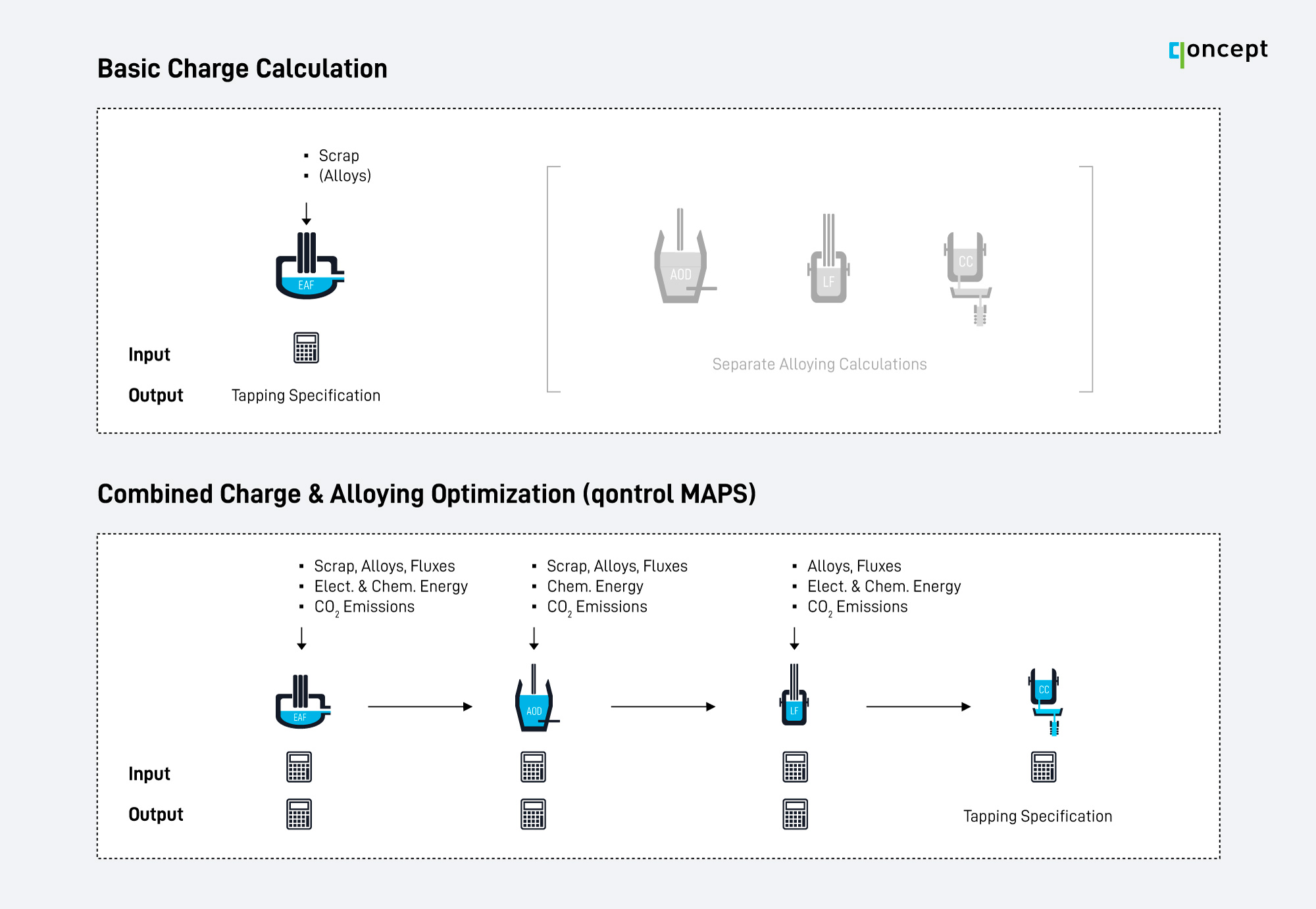
Combined charge, alloying and energy optimization along the complete production line.
In a project for a German producer of alloyed steels, qontrol MAPS was implemented to optimize the complete production route from melting to casting rather than the EAF charge mix alone. The system combines target chemistry, process constraints, material availability, market prices, energy costs, and emission related costs to determine the best overall strategy for each heat.
For example, in stainless steel production, qontrol MAPS evaluates the complete metallurgical and economic impact of using different scrap grades. The system determines whether the higher nickel and molybdenum content of 316 scrap justifies its additional purchase cost, or whether a lower-cost charge based on 304 scrap, combined with targeted alloying additions, provides the better overall result. This assessment considers the effects on melt chemistry, temperature, energy demand, downstream processing, and total cost across the EAF and AOD route.
The model also considers metallurgical reactions. Oxidation reactions, such as oxygen blowing, affect melt chemistry, release chemical energy, and change the value of available scrap grades. Reduction reactions that transfer valuable alloying elements from the slag back into the melt are considered as well, affecting final melt composition, alloying requirements, and overall heat economics.
Typical cost savings range from 5–10 €/t for rebar production and can reach up to 50 €/t for alloyed steels.
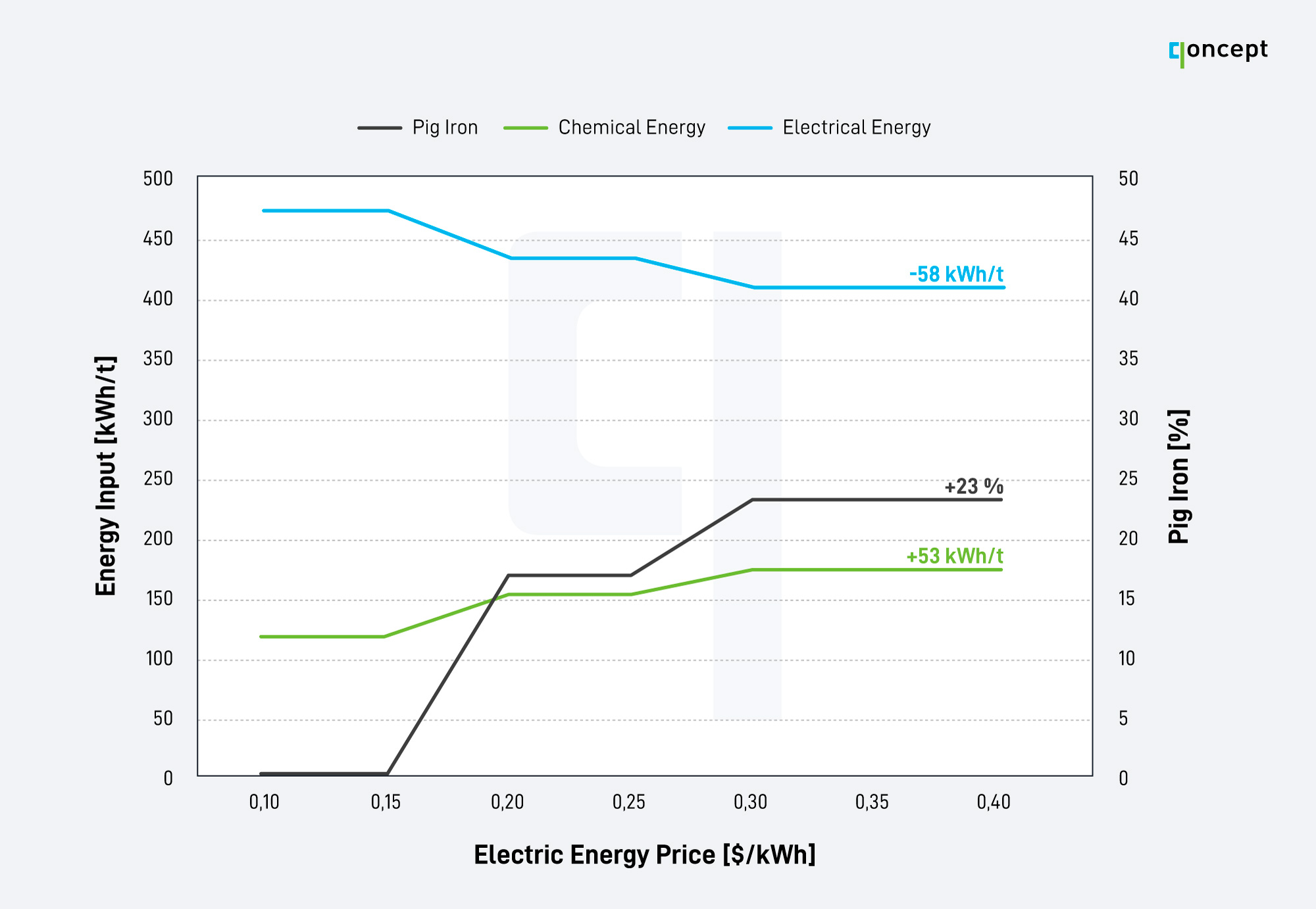
Optimizing the balance between chemical and electrical energy input
In a project for a Swedish steel producer, qontrol MAPS was implemented to optimize the balance between electrical and chemical energy in the EAF. The system calculates the energy required to heat the selected charge mix to the defined target temperature, taking into account the thermal properties of all input materials, available energy sources, and the efficiencies of the respective energy conversion processes.
Metallurgical reactions are included directly in the energy balance. qontrol MAPS quantifies the chemical energy released or absorbed during these reactions and evaluates electrical energy, natural-gas burners, and oxidation energy consistently within one optimization model. Based on current electricity prices, process conditions, and target power-on times, the system determines the most economical combination of material and energy inputs.
For example, when electricity costs are high or accelerated melting is required, the model can identify when additional chemical energy is economically beneficial. This may include the use of scrap with higher carbon or silicon content or other carbon carriers such as pig iron. Rather than optimizing material cost and energy consumption separately, qontrol MAPS identifies the overall strategy that minimizes combined raw-material, energy, and CO2 costs while maintaining stable EAF performance and reliable melt quality.
Typical cost savings based on energy optimization were in the range of 5 – 10 €/t.
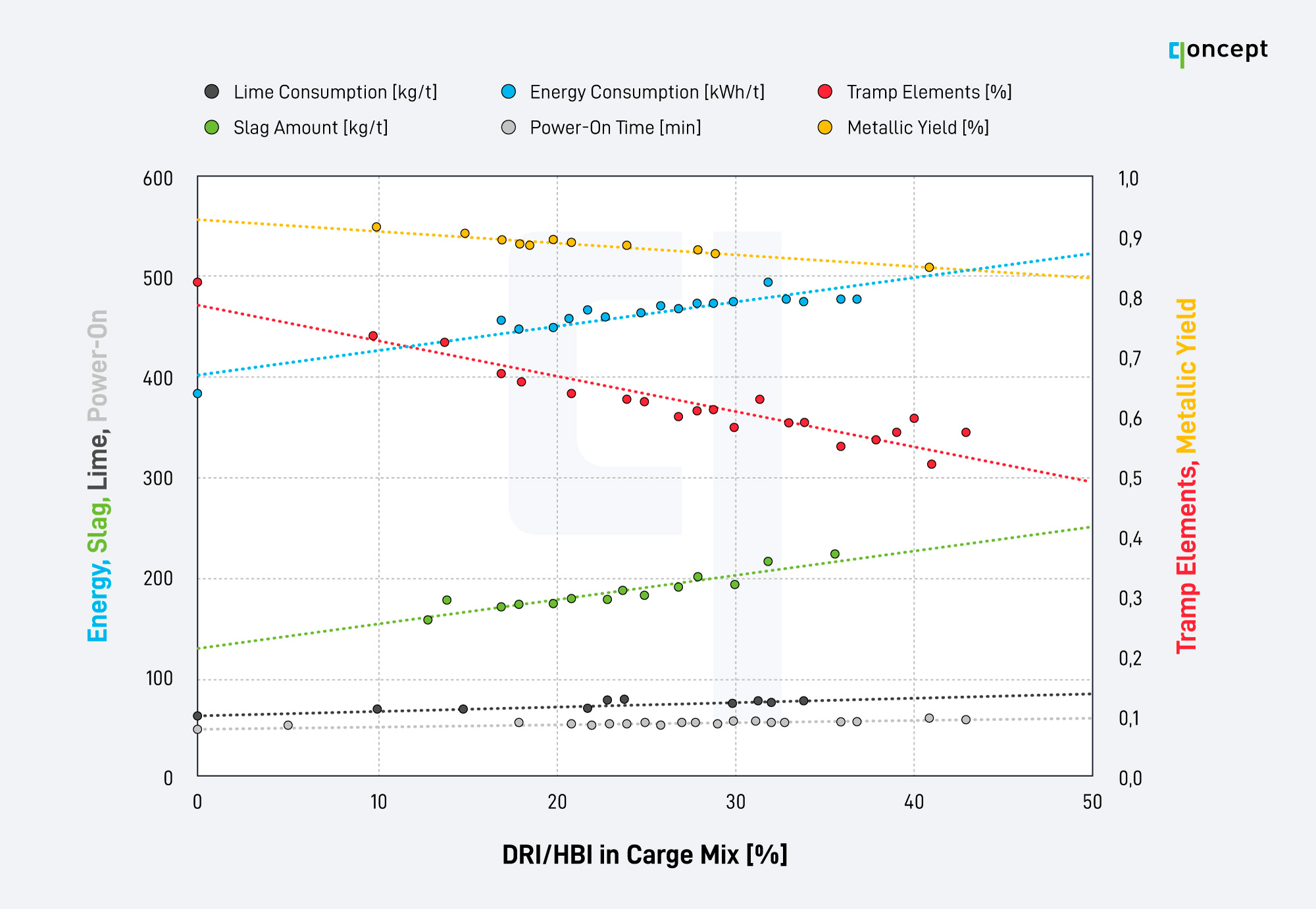
Finding the ideal share of DRI/HBI in the charge mix for every heat
In a project for a European steel producer, qontrol MAPS was implemented to optimize the balance between DRI/HBI and scrap in the EAF charge mix. The system evaluates DRI/HBI characteristics such as temperature, metallization, gangue content, chemical composition, and metallic yield, together with the quality and availability of the available scrap grades. As scrap analyses can change significantly over time, the economically optimal DRI/HBI share must also be continuously adjusted.
qontrol MAPS considers the impact of DRI/HBI on EAF performance, including the dilution of tramp elements, electrical energy demand, slag volume, lime consumption, metallic yield, and power-on time. These effects are evaluated together with raw-material prices, energy costs, CO2 costs, target chemistry, and local process constraints.
For example, when the copper content of the available scrap increases, the model can identify whether a higher DRI/HBI share is economically beneficial to dilute tramp elements and maintain the required melt quality. At the same time, it considers the associated effects on energy demand, yield, and slag-related costs. Rather than applying a fixed DRI/HBI ratio, qontrol MAPS determines the cost-optimal share for each heat while ensuring stable EAF performance and reliable melt quality.
Typical benefits include lower costs for achieving the required melt quality, reduced use of DRI/HBI where it provides no economic benefit, and more stable EAF performance despite fluctuating scrap quality.
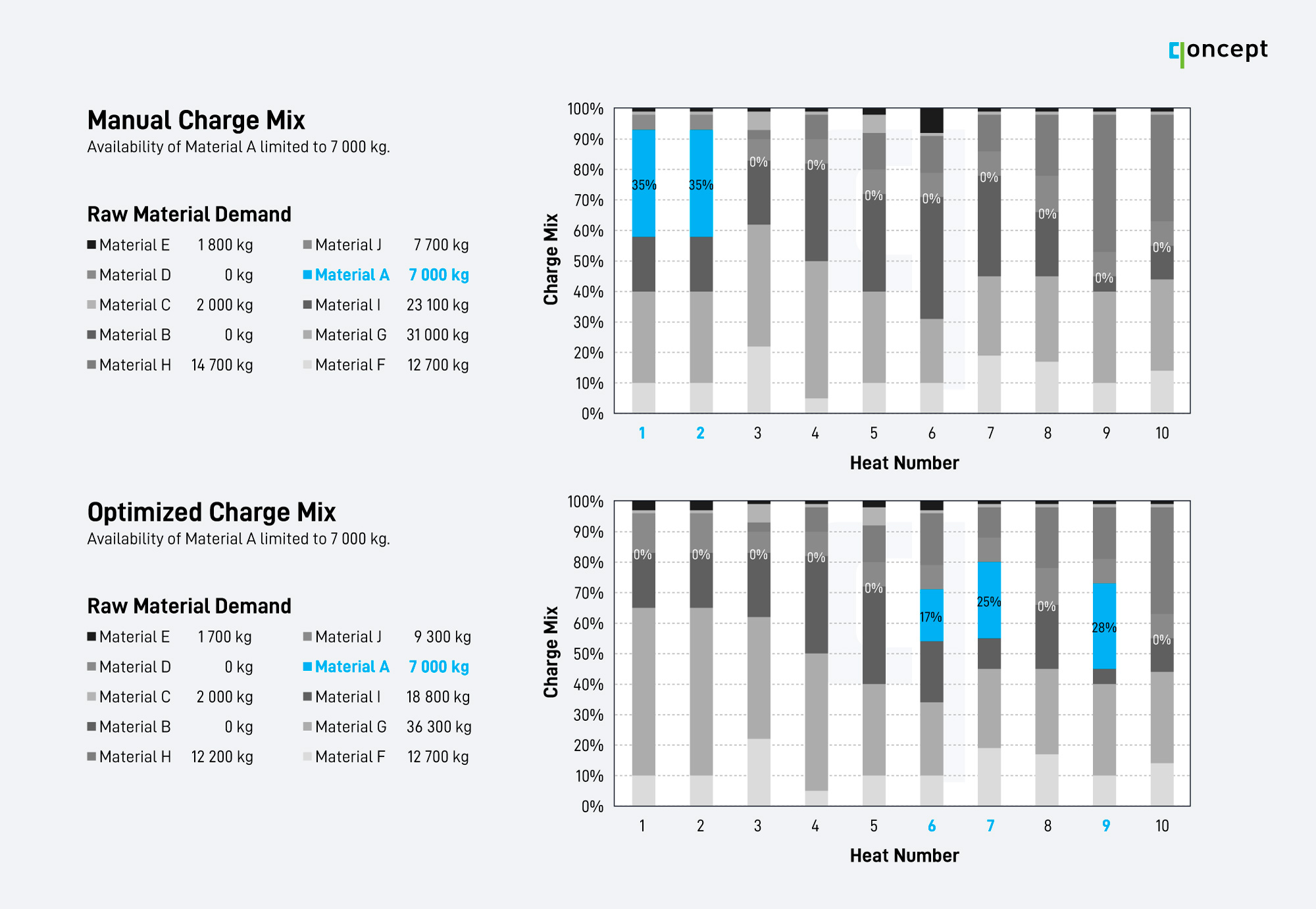
Optimizing raw-material allocation across complete production campaigns
In a project for a European steel producer, qontrol MAPS was implemented to optimize raw material allocation across an entire production campaign rather than optimizing each heat independently. The system determines a heat-specific charge and alloying strategy while considering target chemistry, target temperature, metallurgical constraints, energy demand, CO2 costs, available inventories, planned deliveries, purchasing restrictions, and minimum or maximum stock levels.
For example, a limited inventory of a certain scrap type can be allocated very differently when the complete campaign is considered. In the manual approach, such material might be consumed in the first heats, where it may appear beneficial from an individual-heat perspective. The optimized approach reserves the same material for later heats, where it provides a greater metallurgical or economic benefit for the overall campaign.
Rather than selecting the lowest-cost mix for each heat in isolation, qontrol MAPS determines the most effective use of every available material across all planned heats. This prevents scarce or strategically valuable materials from being consumed prematurely and reduces the need for costly substitutions or last-minute purchases later in the campaign.
The result is a feasible, heat-specific charge and alloying strategy for the entire campaign that minimizes total campaign costs, together with a consolidated raw-material demand plan that supports purchasing and inventory planning.
explore our products
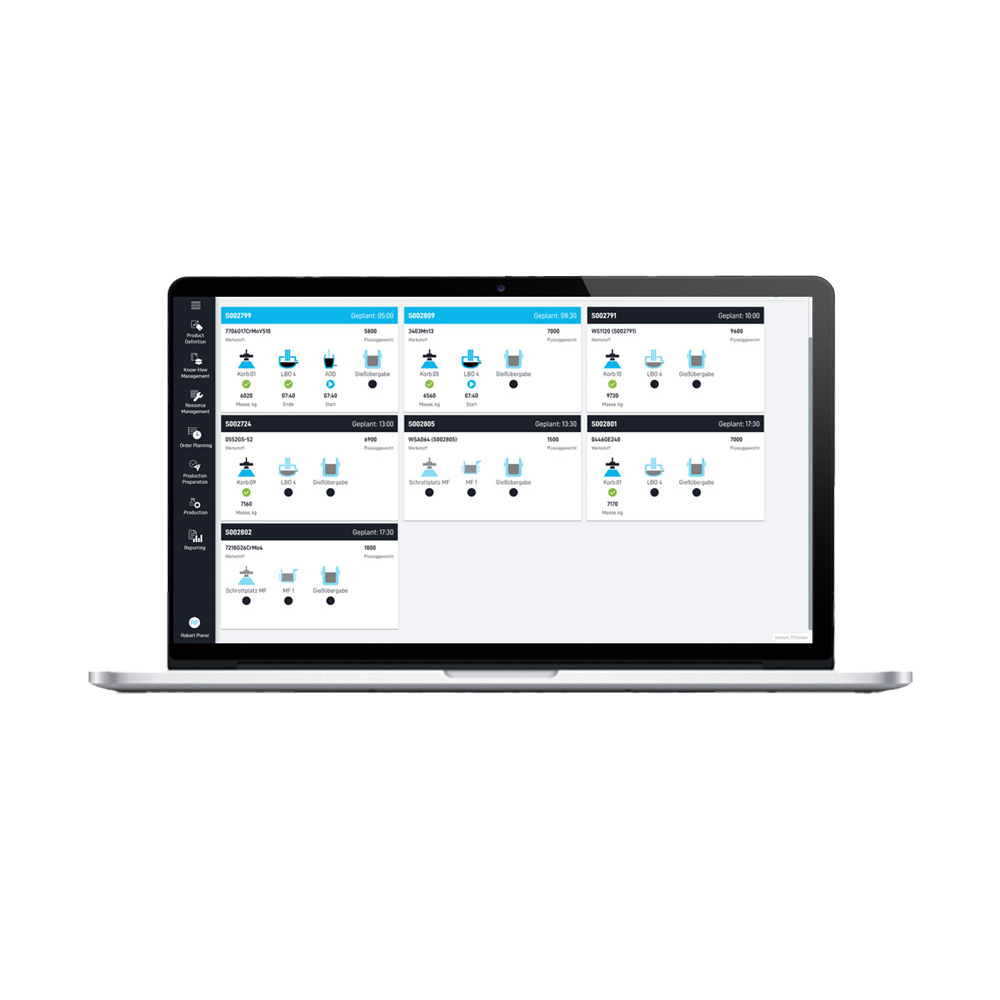
qontrol L2
Control and optimization of steel production processes with state-of-the-art software, sound metallurgical models and artificial intelligence.

qontrol MES
Orchestrated processes, seamless system integration and data-supported optimization for maximum efficiency in steel production.

qontrol LMS
Make every ladle count: for more safety, less downtime, and smarter decisions.